The two figures sit side by side, perfectly still, almost symmetrical.
Their posture is controlled, disciplined, and intentional. There is no gesture, no smile, no attempt to please the viewer. They are not performing. They are presenting.
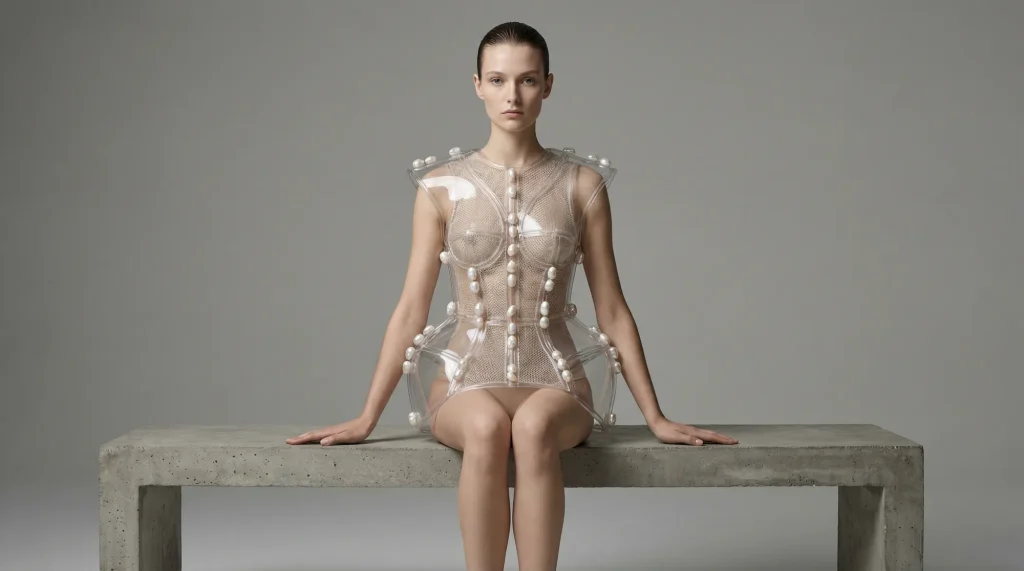
The woman wears a structured dress built from pearls and transparent materials. It feels both fragile and armored at the same time. Pearls, traditionally associated with purity and elegance, are used here in excess, turning decoration into structure. This is no longer jewelry. It becomes architecture.
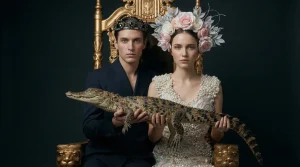
Her headpiece reinforces this idea. It is not a traditional crown. It is a composition — part floral arrangement, part sculptural object. It suggests nature, but it is clearly controlled and designed. Nothing is accidental.
The man, in contrast, wears a dark tailored suit. It is modern, sharp, and minimal, but marked with abstract crown symbols. His actual crown is geometric, almost industrial. It rejects historical ornament and replaces it with a language of lines and structure. Power here is not inherited. It is constructed.
Together, they form a unified image, but not a romantic one. There is no visible connection between them. They are aligned, not emotionally, but conceptually. Two individuals occupying roles rather than expressing feelings.
The setting supports this interpretation. The throne is reduced to a concrete-like form, stripped of decoration. It references authority but removes its traditional luxury. The background is neutral, almost clinical. Even the studio lights are visible, reminding us that this is a constructed reality.
And that is the key point. This is not a portrait of rulers. This is a portrait of how we imagine power today.
Modern culture no longer trusts inherited symbols. Crowns, thrones, and royal imagery are still recognizable, but they are reinterpreted. Fashion takes these symbols and rebuilds them, often in ways that feel slightly uncomfortable or unnatural. That discomfort is intentional. It forces the viewer to question what power actually means.
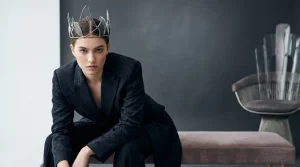
In this image, power is not warmth, charisma, or connection. It is distance, control, and clarity. The figures do not invite you in. They hold their space.
This is why the image feels both familiar and strange. It uses the language of classical portraiture but removes its emotional layer. What remains is structure, form, and presence.
In the end, this is not about a king and a queen. It is about the idea of authority in a world where tradition is no longer enough. It is about how identity is built, displayed, and controlled.
And most importantly, it shows that in modern visual culture, power is no longer inherited. It is designed.